Grace Weaver • Parataxis • Berlin Art Week • 04.09.–24.10.2026
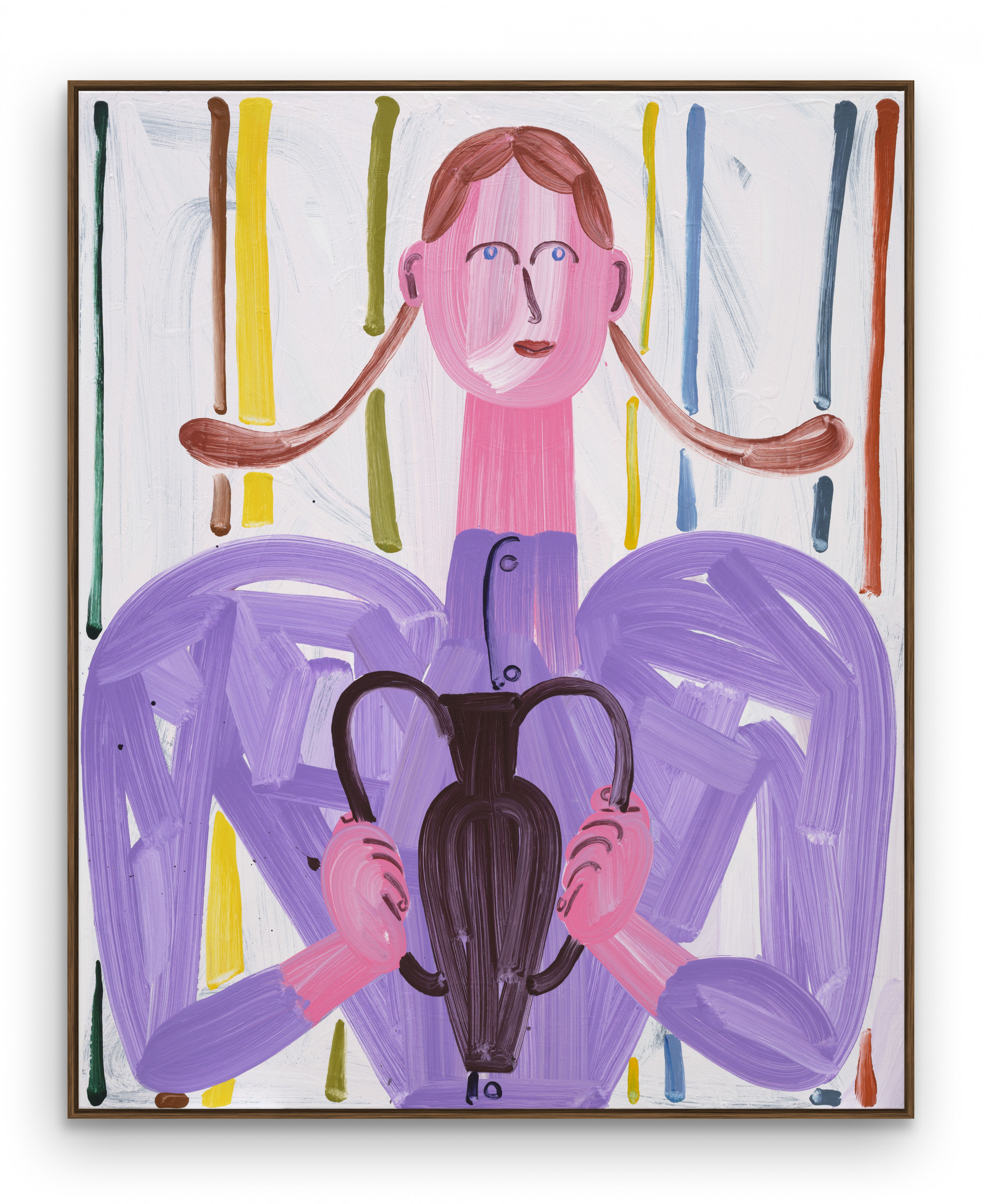
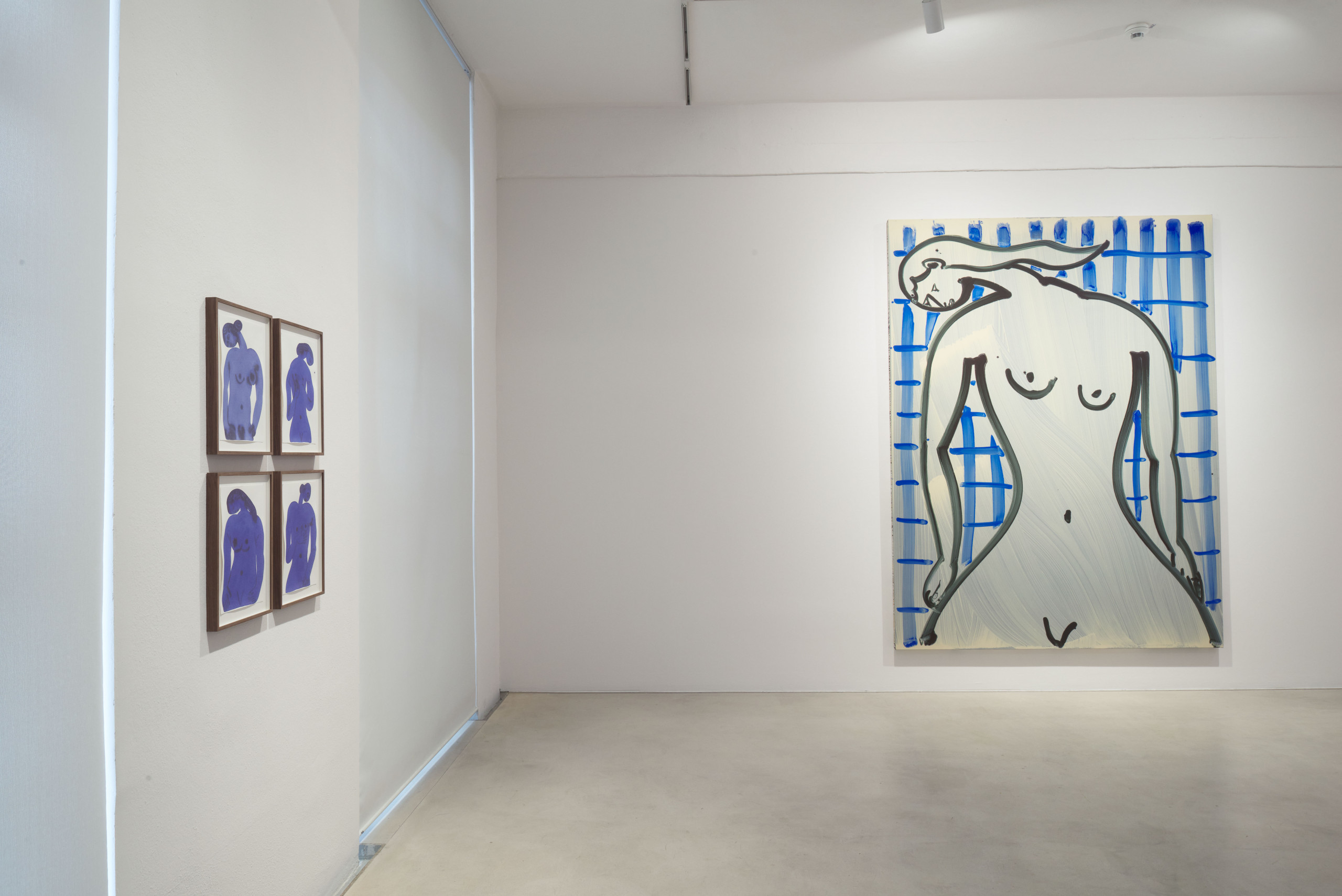
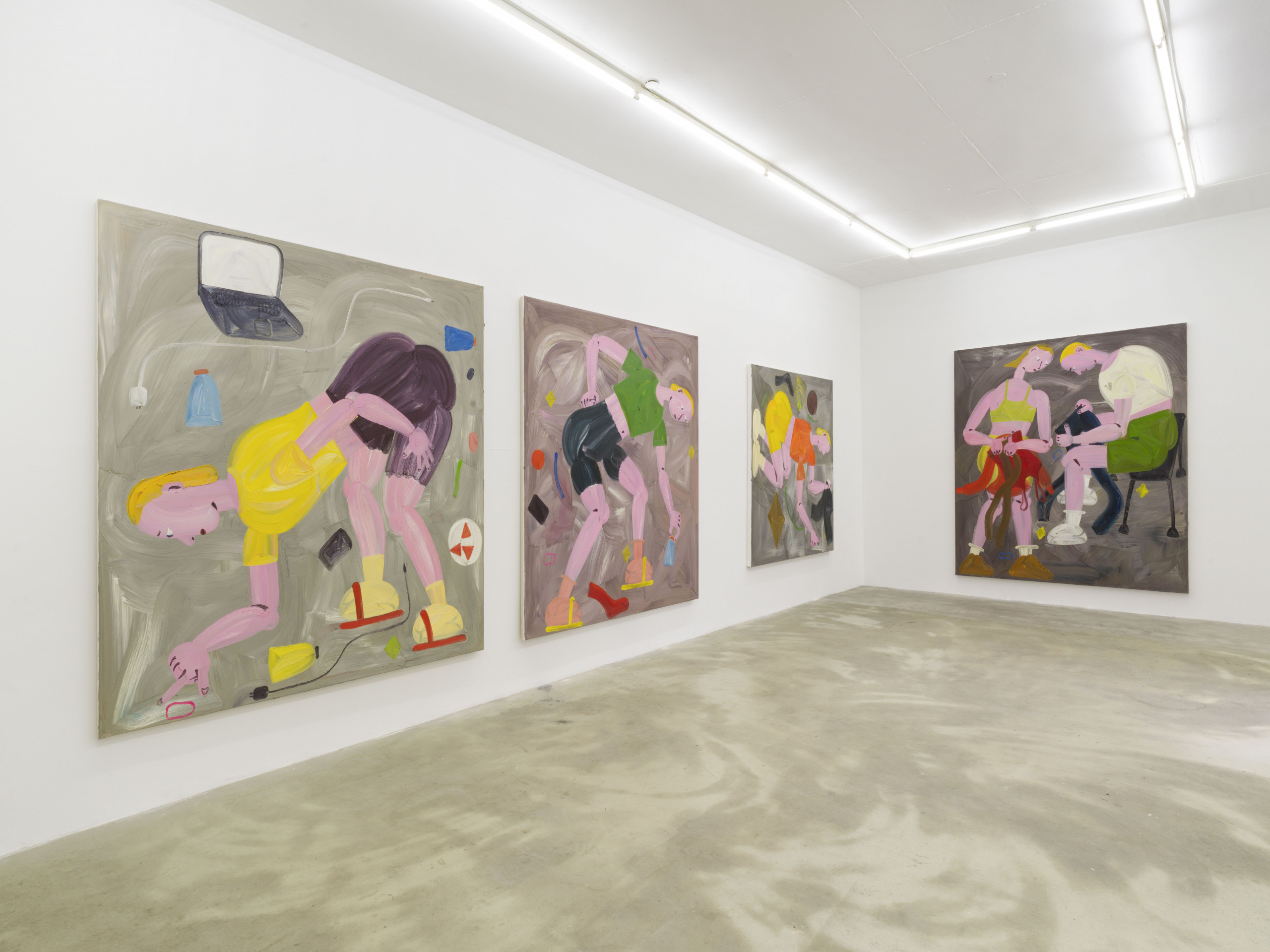
Depicted in domestic interiors, Weaver’s tall, sloping protagonists animate the small ceremonies of everyday life. Solitary figures and couples sit on low and high-backed chairs, hold amphorae, gather around tables, or raise a glass. Behind them, coloured stripes hint at panelled walls or doorways – abstract notations of domestic interiority that dissolve into painterly fields. These familiar scenes unfold with the measured cadence of ritual. Yet this ceremonial gravity is continually unsettled by a dry formal humour. Bodies are compressed, elongated, or made to obey archaic pictorial logic: two legs merge into one in profile, heads become near-perfect circles, and torsos mirror the shape of vessels. As in the writings of James Joyce, meaning accumulates through the repeated gestures of everyday life, inviting us to ‘encounter for the millionth time the reality of experience.’[1]
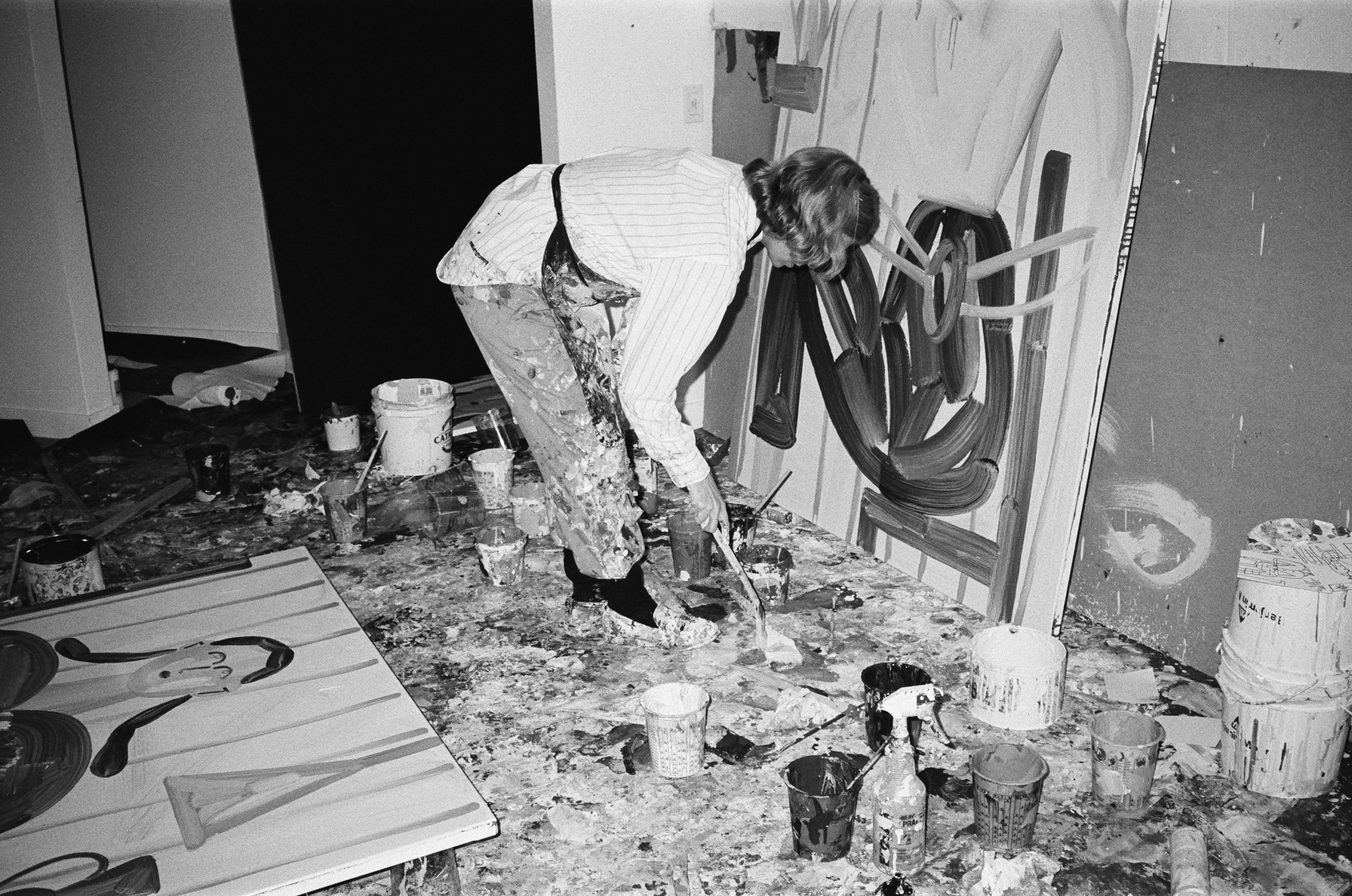
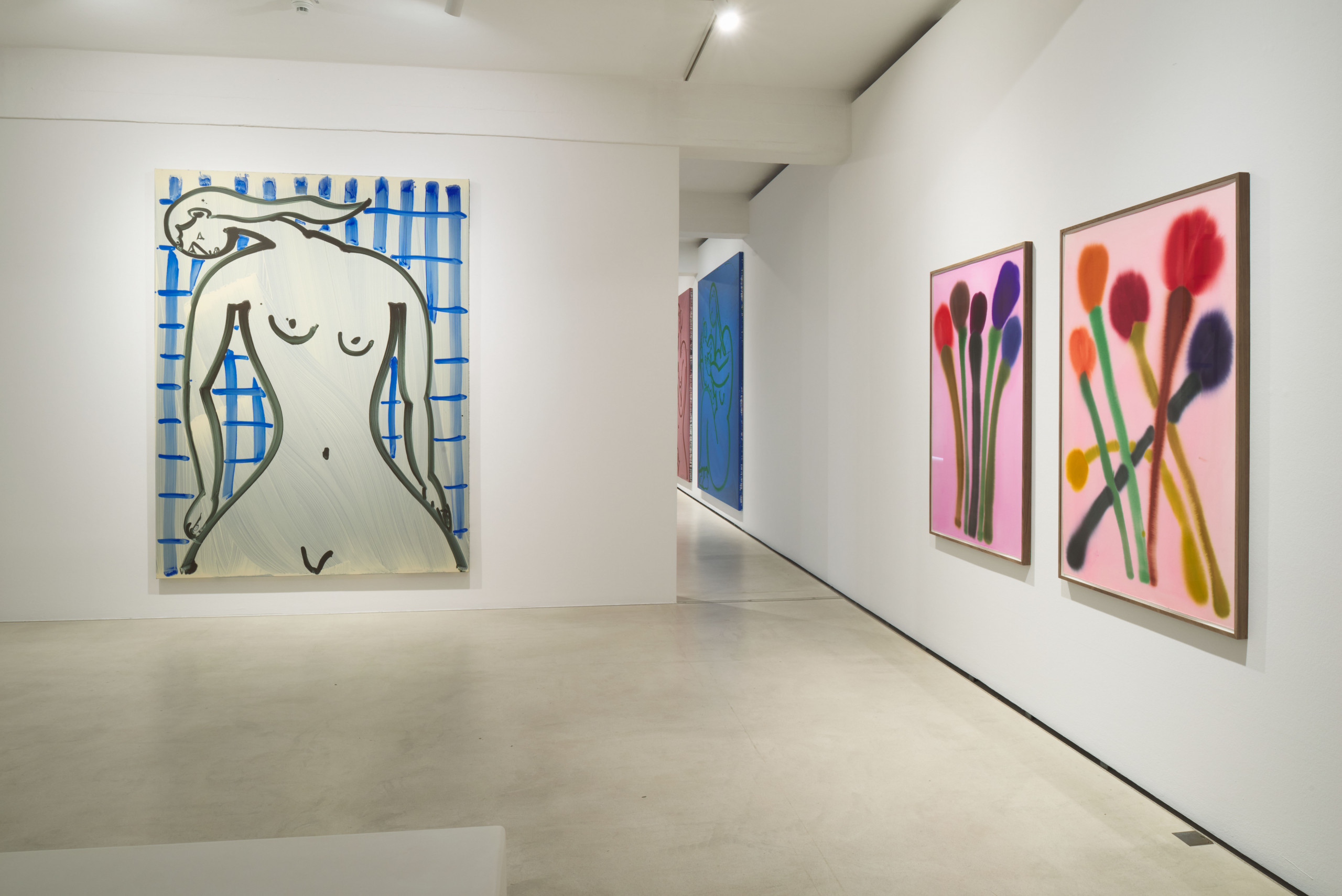
While the support is painstakingly prepared through successive layers of paint, Weaver’s final images are formed within a single wet plane, allowing figure, ground and colour to emerge simultaneously. Bright primaries and unexpected chromatic juxtapositions – including cobalt blues inspired by Mycenaean frescoes – are brushed, stained, and erased into the same open field so that colour appears woven into, rather than laid upon, the surface. Each composition unfolds as a sequence of painterly decisions. In the largest works, Weaver paints from left to right, allowing vertical zips and broad, bristling brushstrokes to emerge across the canvas like writing on a scroll.
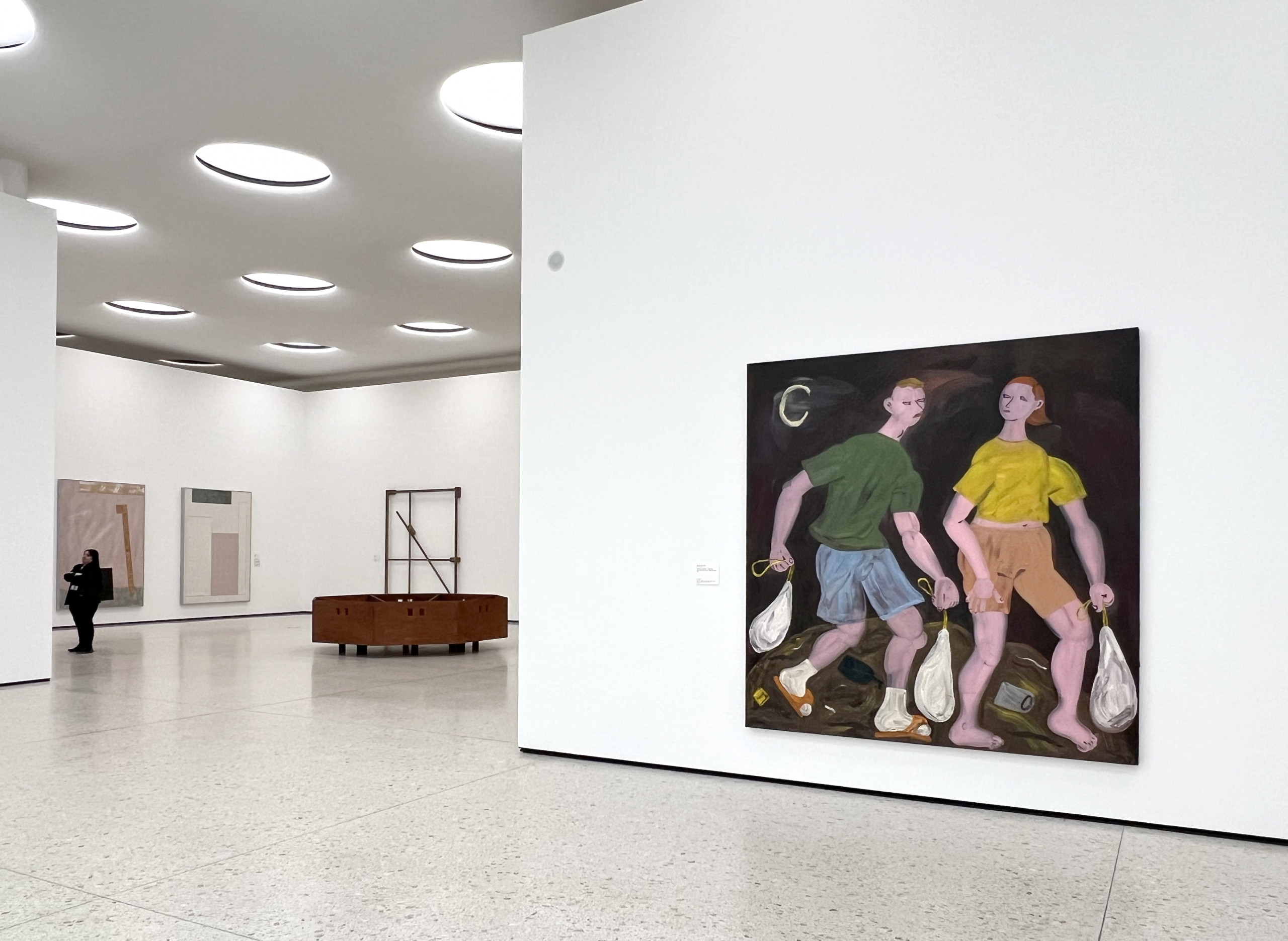
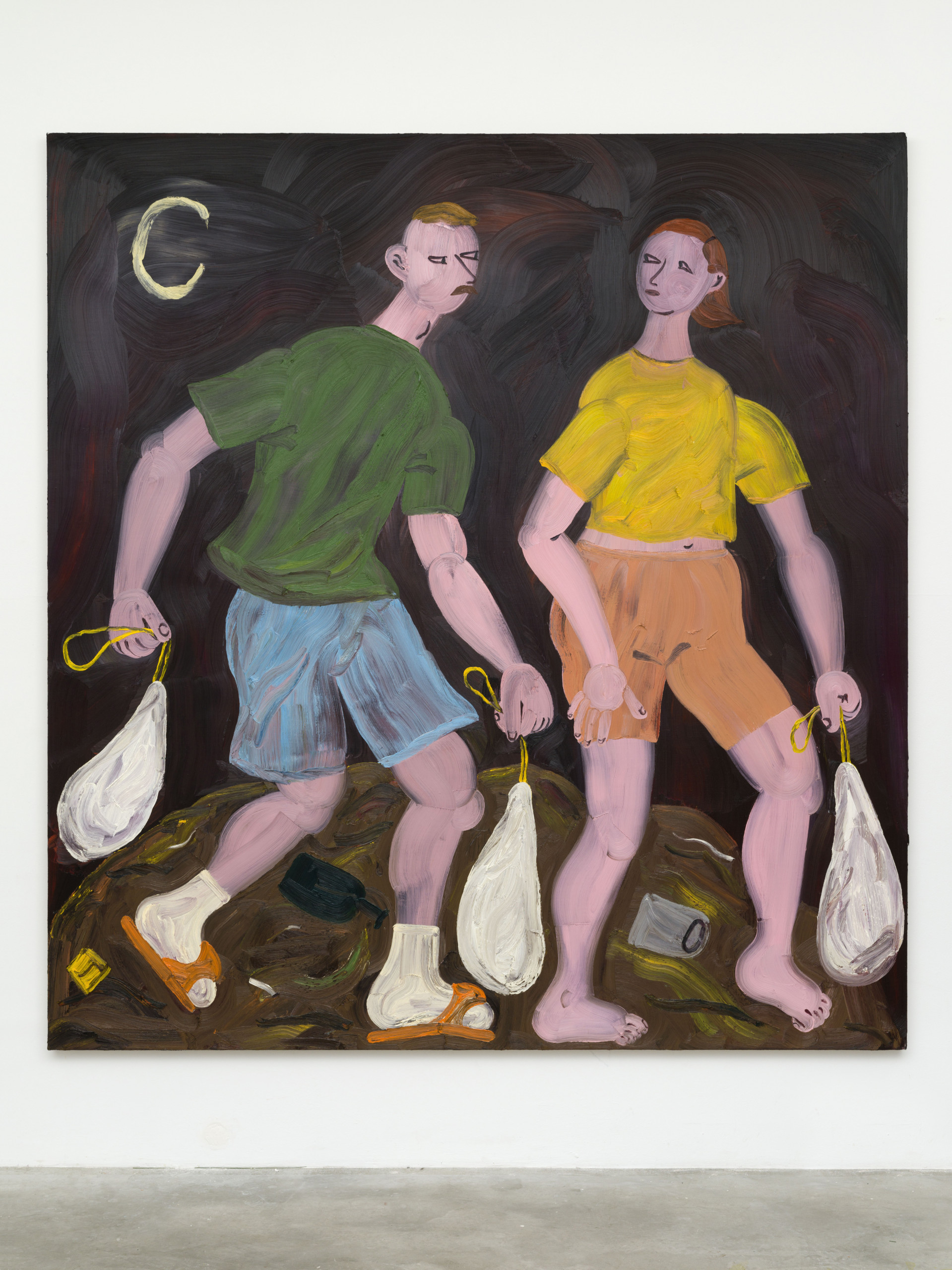
The exhibition title, Parataxis, derives from the Greek verb paratassō, meaning ‘to place side by side’ or ‘to draw up in battle order’. The paintings operate similarly, compressing bodies and forms in a shallow pictorial field, where they appear less embedded in coherent space than inscribed across its surface. Here, the domestic world is distilled into a concise repertoire of forms. Lamps become simple triangles; chairs, tables and architectural elements resolve into rhythmic lines and geometric planes. Presented in symmetrical frontality or strict profile, the figures carry the composure of Mesopotamian cylinder seals and ancient reliefs, while their broad shoulders and slender torsos echo the swelling contours of the Trojan drinking vessels and double-handled amphorae that they hold. Bodies, vessels and furniture are bound by visual rhyme: a shoulder repeats the curve of a handle; the rigid back of a chair finds its counterpart in a figure held stiffly upright, as bodies and objects alike submit to the painting’s formal logic. Rather than being expressed through gesture, the emotional charge of the figures is carried by colour, line, interval and form.
A number of smaller-format paintings sharpen the tension between recognisable human presence and geometric abbreviation. Modest in scale, the expressive potential of each brushstroke is heightened: a figure’s hand is articulated by only a few decisive marks, a fingernail summoned by a single speck of paint. This economy of means intensifies the image, concentrating Weaver’s visual language and requiring each gesture to carry an unusual density before reappearing, transformed, in the larger canvases.
Parataxis is jointly presented in the Berlin galleries of Galerie Max Hetzler and Soy Capitán.
[1] J. Joyce, A Portrait of the Artist as a Young Man, 1916.
Grace Weaver (b. 1989, Vermont) lives and works between New York and Berlin. She received her MFA from Virginia Commonwealth University, Richmond, in 2015.
Her work has been the subject of solo exhibitions at international institutions, including Prélude, Kunstmuseum Magdeburg (2026), DE; Grace Weaver I and Grace Weaver II, Neues Museum, Nürnberg (2023 and 2024), DE; Painters and Portraits, Yuz Museum, Shanghai (2023), CN; Little Sister, Oldenburger Kunstverein (2019), DE; O.K., Kunstpalais Erlangen (2019), DE; Pedestrian, Kunstverein Reutlingen (2017), DE; and Dakshina Chitra, Chennai (2012), IN.
Her work has also been included in group exhibitions such as I Can Buy Myself Flowers, Kunsthal n, Copenhagen (2026), DK; I Will Look Into the Earth, Kunsthalle Helsinki (2025/26), FI; Notes of Becoming, Oldenburger Kunstverein (2025), DE; How To & Know How, Neue Galerie Gladbeck (2022), DE; How (not) to fit in – Metaphern der Adoleszenz, Villa Merkel, Esslingen (2022), DE; Auszeit: Von Pausen und Momenten des Aufbruchs, Kunstmuseum Ravensburg (2021), DE; and No Man is an Island – The Satanic Verses, ARoS Aarhus Art Museum, Aarhus (2016), DK — as well as in collection presentations at Kunstpalast Düsseldorf (2024) and, currently, at Städel Museum, Frankfurt am Main (2026), DE.
Weaver’s works are held in the collections of ARoS Aarhus Art Museum, Aarhus, DK; Chrysler Museum of Art, Norfolk, US; FRAC des Pays de la Loire, Carquefou, FR; Philara Collection, Düsseldorf, DE; Stadler Collection, Munich, DE; Kunstpalast Düsseldorf, DE; Pizzuti Collection of the Columbus Museum of Art, Columbus, US; Städel Museum, Frankfurt am Main, DE; Deutsche Bank Collection, Frankfurt am Main, DE; Yuz Foundation, Shanghai, CN; Smicka Collection, Humpolec, CZ; Fleming Museum of Art, Burlington, US; and MdbK Leipzig, DE.